Tuesday, March 24, 2015
Didi 29 Retro Progress
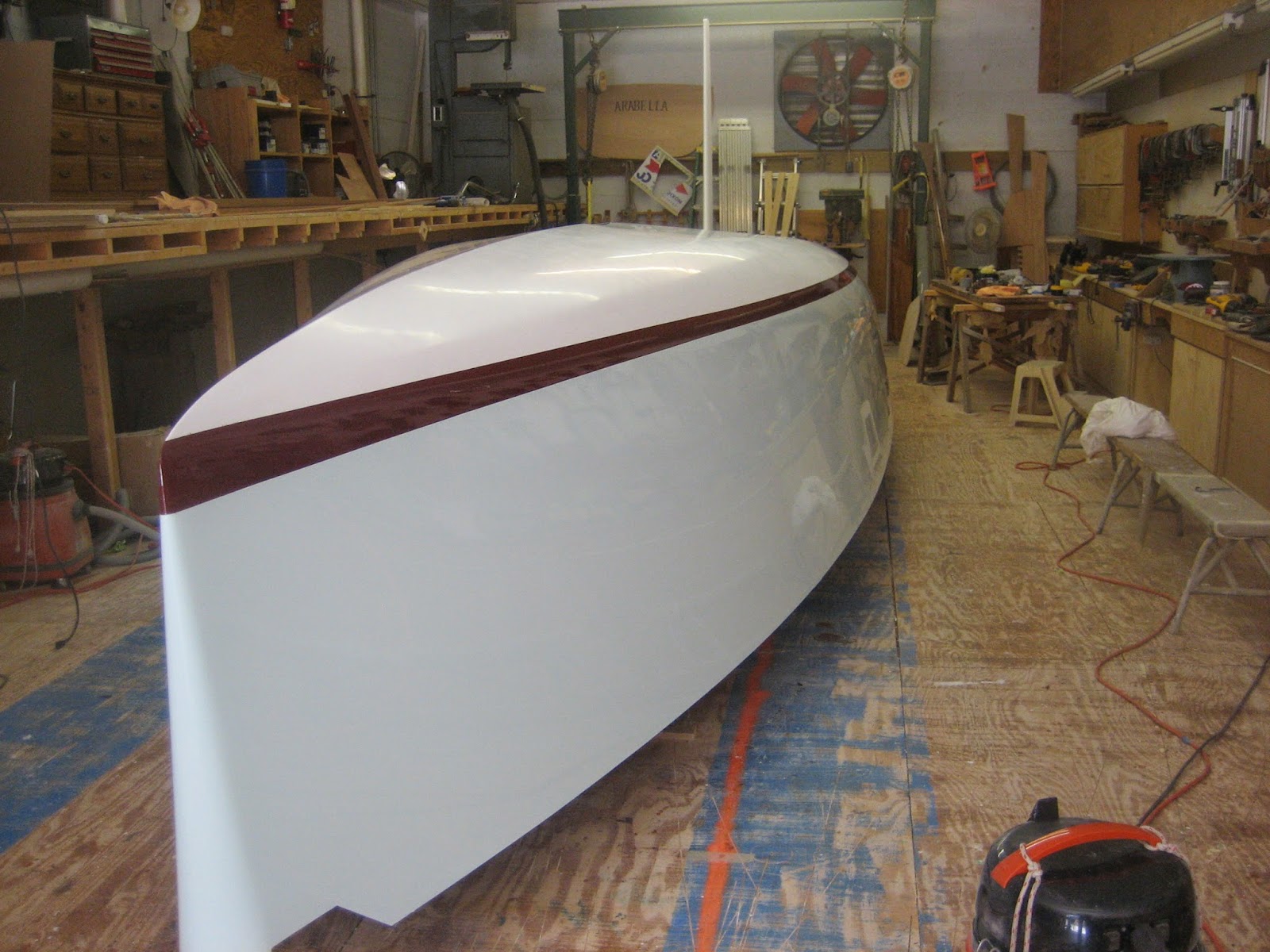
Bruce Mierke is building a Didi 29 Retro in Murphy, North Carolina. Bruce is a professional boatbuilder, building her for himself and progressing nicely. He has now completed the hull and it will be turned over in a few weeks.
This design is based on the Didi 26, modified to create a more classic image. Carrying a choice of rigs, the squaretop Marconi rig below and two gaff rigs further down the page. It is a radius chine plywood design, round bilge from plywood and can be built from plans or a CNC kit. Although Bruce is a professional builder, I developed this construction method primarily for amateurs and they have built many boats to this range of designs.
Here are the latest photos from Bruce, showing the beautiful standard of finish that he has achieved.

For more info on this and our other designs, visit http://dixdesign.com/
Read More..
This design is based on the Didi 26, modified to create a more classic image. Carrying a choice of rigs, the squaretop Marconi rig below and two gaff rigs further down the page. It is a radius chine plywood design, round bilge from plywood and can be built from plans or a CNC kit. Although Bruce is a professional builder, I developed this construction method primarily for amateurs and they have built many boats to this range of designs.
 |
| Marconi rig of Didi 29 Retro |
 |
| Beautiful hull finish. |
 |
| Two gaff rigs, racing at left and cruising at right. |
For more info on this and our other designs, visit http://dixdesign.com/

Thursday, March 19, 2015
Dix 470 Catamaran Kit Build in UK
Kevin Bream is the owner of Exocetus Catamaran Kits in UK, the company that he formed to develop kits for our plywood catamaran designs and to market them to builders, both professional and amateur. To be sure that he does a proper job of this, he is building the Dix 470 himself, to test the fit of all parts and to develop systems to ease the whole construction process.
The number of plywood components in a boat like this is massive. Just the thought of figuring the size and shape for each one, then cutting it out before fitting it in place on the boat, can make the project being contemplated seem very intimidating. Anything that can be done to reduce the number of hours in the build and the flow of elbow grease from builder into the boat is worthy of consideration. It reduces building time for any kind of builder. For a boatyard it increases profits and for the amateur it gets him afloat and sailing sooner.
Kevin Bream has one hull completed and is now working on the second. Lessons that he learned while building the first hull have been put into making a better product. Aside from that, anyone who buys a kit from Exocetus will benefit from a product that has been built by the supplier himself. Who could provide better backup support to the builders than he who has done the development, the cutting and the building before them?
Here are recent photos of the project.
Exocetus Catamaran Kits can also supply similar kits for the bigger sister, the DH550.
To see more about these designs, as well as others of all types and materials, please visit http://dixdesign.com/
Read More..
The number of plywood components in a boat like this is massive. Just the thought of figuring the size and shape for each one, then cutting it out before fitting it in place on the boat, can make the project being contemplated seem very intimidating. Anything that can be done to reduce the number of hours in the build and the flow of elbow grease from builder into the boat is worthy of consideration. It reduces building time for any kind of builder. For a boatyard it increases profits and for the amateur it gets him afloat and sailing sooner.
Kevin Bream has one hull completed and is now working on the second. Lessons that he learned while building the first hull have been put into making a better product. Aside from that, anyone who buys a kit from Exocetus will benefit from a product that has been built by the supplier himself. Who could provide better backup support to the builders than he who has done the development, the cutting and the building before them?
Here are recent photos of the project.
 |
| The workshop of Exocetus Catamaran Kits, first hull on the right. |
 |
| Completed Dix 470 starboard hull, waiting for its mate. |
 |
| Self-jigging building stocks, bolted to the concrete slab. |
 |
| Interlocking bulkheads & backbone assembled, stringers in progress. |
 |
| Daggerboard casing. This boat can have cruising keels or daggerboards. |
 |
| Skeleton of port hull, ready for skin. The jigsaw joints are visible at panel edges. |
 |
| Skeleton with side skin being dry-fitted to test for proper fit. |
 |
| Stern detail of starboard hull, showing swim platform. |
To see more about these designs, as well as others of all types and materials, please visit http://dixdesign.com/
Wednesday, March 18, 2015
Don't Underload Your Diesel Engine
I have been around boats with diesel engines for more than 40 years. In that time I have heard many times that we should not run a diesel engine under light loads for long periods because "it can glaze the cylinders". Another statement has been "diesel engines like to be loaded". Maybe you have also been told or read this but do you really understand what is going on with your diesel, why it is so important to run it with healthy loads and why you should not over-power your boat?
I am a proponent of reasonable size motors in sailboats but often deal with owners who want to put much bigger motors in their boats than I recommend. My 36ft boat had 20hp, my 34 had 12hp and my 38 footer had 18hp. That 12hp could push my boat against a 40 knot wind on flat water. Sure, it was slow progress and the motor was working very hard but it could do it. In less extreme conditions the motor wasn't just ticking over to move her at reasonable speed. A 20hp motor would still be acceptable on that boat but anything bigger would be over-powering it.
Professional Boatbuilder magazine has an enlightening article on this subject on their website, written by their technical editor Steve D'Antonio. Steve also works with owners and builders through his own business, Steve D'Antonio Marine Consulting, Inc.
I don't want to repeat here what Steve writes about so clearly in his article, just to point out again that you do harm to your motor, to your bank account and to the environment by over-powering your boat, which inevitably results in you running your motor at speeds that will cause problems. Those problems won't only materialise "in the long run", they can start to appear when the motor has run for no more than a few thousand hours. You will be inviting self-inflicted pain and heartache on yourself and future owners of the boat.
Please read Steve's article. And for info on my designs, please visit http://dixdesign.com.
Read More..
 |
| A turbo charger turbine wheel fouled with soot and fuel, the result of chronic underloading. This gunge also fouls your upper cylinders, exhaust valves and exhaust system. From there it is washed out with the cooling water into the water on which you enjoy your boating. Photo courtesy of Steve D'Antonio. |
I am a proponent of reasonable size motors in sailboats but often deal with owners who want to put much bigger motors in their boats than I recommend. My 36ft boat had 20hp, my 34 had 12hp and my 38 footer had 18hp. That 12hp could push my boat against a 40 knot wind on flat water. Sure, it was slow progress and the motor was working very hard but it could do it. In less extreme conditions the motor wasn't just ticking over to move her at reasonable speed. A 20hp motor would still be acceptable on that boat but anything bigger would be over-powering it.
Professional Boatbuilder magazine has an enlightening article on this subject on their website, written by their technical editor Steve D'Antonio. Steve also works with owners and builders through his own business, Steve D'Antonio Marine Consulting, Inc.
 |
| The grooves that retain oil in a cylinder wall, known as crosshatch, can be seen here. Frequent light load operation can wear away this pattern; known as cylinder glazing, it exacerbates blow-by and the issues that accompany it. Photo courtesy of Steve D'Antonio. |
Please read Steve's article. And for info on my designs, please visit http://dixdesign.com.
Monday, March 9, 2015
Jim's Didi Sport 15 Nears Completion
Followers of this blog have read about the DS15 being built by Jim Foot in Port Elizabeth, South Africa. His project is nearly done and is looking great. He is into the rigging stages and should launch in a few weeks.
Next instalment should be launching and sea trials in a few weeks. Until then, see more at http://dixdesign.com.
Read More..
 |
| Foredeck and mast deck panels fitted. |
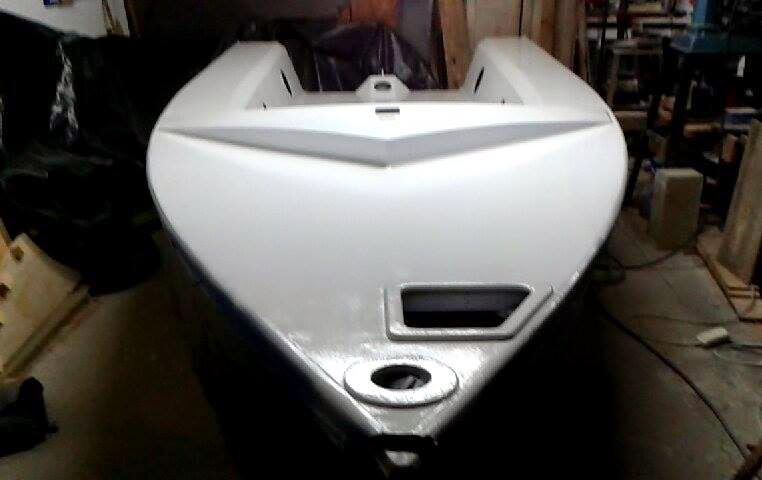 | |
| Foredeck almost complete. Spinnaker chute on right of centreline. |
 |
| Jim's DS15 tries her dolly for size, showing her clean, modern hull. |
 |
| DS15 shows her bottom and her performance potential. |
 |
| Clean lines and powerful stern. |
 |
| Mast and standing rigging, waiting for her sails. |
Thursday, March 5, 2015
Yachting Monthly Capsize Video
Yachting Monthly have a very interesting video of a capsize test on their YouTube Channel. I only became aware of it yesterday when it was highlighted by Scuttlebutt Sailing News.
Many have read the accounts that I have written about our capsize experience on the Didi 38 "Black Cat" in the Cape To Rio Race 2014. It is not possible to visualise what it is like to be there in that situation, even if you sit inside your boat and try to imagine it turning around you but this video goes a long way to help visualise it. It is not fully realistic because the roof stays at the top as the boat rotates, so the world is rotating around the boat rather than the boat rotating within the world around it. To provide better visualisation the camera needs to stay upright while the boat goes upside-down.
Bear in mind that this test is in flat water and the boat is rotated quite slowly from upright to upside-down, then rights itself quickly. Normally a capsize will happen in seas that are large and confused, so it is a much more violent process than seen in the video, with the boat being thrown in confused directions while it capsizes. Despite that, it is worth watching, to see the way that crew, equipment, etc was moved around the cabin and to see just how much water came in even in that still water.
It is not an experience that I would recommend to anyone, yet it is an experience that I am glad to have had and to have survived.
It also validates the toughness of the methods of construction that I have used for these plywood designs, that "Black Cat" came through with minimal damage.
To see our range of designs to carry you across the dam or around the world, please visit http://dixdesign.com/
Read More..
Many have read the accounts that I have written about our capsize experience on the Didi 38 "Black Cat" in the Cape To Rio Race 2014. It is not possible to visualise what it is like to be there in that situation, even if you sit inside your boat and try to imagine it turning around you but this video goes a long way to help visualise it. It is not fully realistic because the roof stays at the top as the boat rotates, so the world is rotating around the boat rather than the boat rotating within the world around it. To provide better visualisation the camera needs to stay upright while the boat goes upside-down.
Bear in mind that this test is in flat water and the boat is rotated quite slowly from upright to upside-down, then rights itself quickly. Normally a capsize will happen in seas that are large and confused, so it is a much more violent process than seen in the video, with the boat being thrown in confused directions while it capsizes. Despite that, it is worth watching, to see the way that crew, equipment, etc was moved around the cabin and to see just how much water came in even in that still water.
It is not an experience that I would recommend to anyone, yet it is an experience that I am glad to have had and to have survived.
It also validates the toughness of the methods of construction that I have used for these plywood designs, that "Black Cat" came through with minimal damage.
To see our range of designs to carry you across the dam or around the world, please visit http://dixdesign.com/
Monday, February 23, 2015
Dylan Bailey Interviews Dudley Dix
Dylan Bailey is a marine surveyor and member of the committee of the Metal Boat Society. He recently interviewed me about my background in boats, designing, boat building and sailing. The interview was for the Metal Boat Society magazine Metal Boat Quarterly and Dylan has also posted it on his own blog. Anyone who wants to read it, please visit Dylan's blog at http://metalboatsurveyor.blogspot.com/2015/02/interview-with-yacht-designer-dudley-dix.html.
Dylan is also the owner of the prototype Little Creek 47 "Flutterby", which was built by his father Howdy Bailey of Howdy Bailey Yacht Services in the 1980s. She is a shallow draft steel cruiser with swing keel, twin rudders and staysail schooner rig.
To see our full range of designs, please visit http://dixdesign.com/
Read More..
Dylan is also the owner of the prototype Little Creek 47 "Flutterby", which was built by his father Howdy Bailey of Howdy Bailey Yacht Services in the 1980s. She is a shallow draft steel cruiser with swing keel, twin rudders and staysail schooner rig.
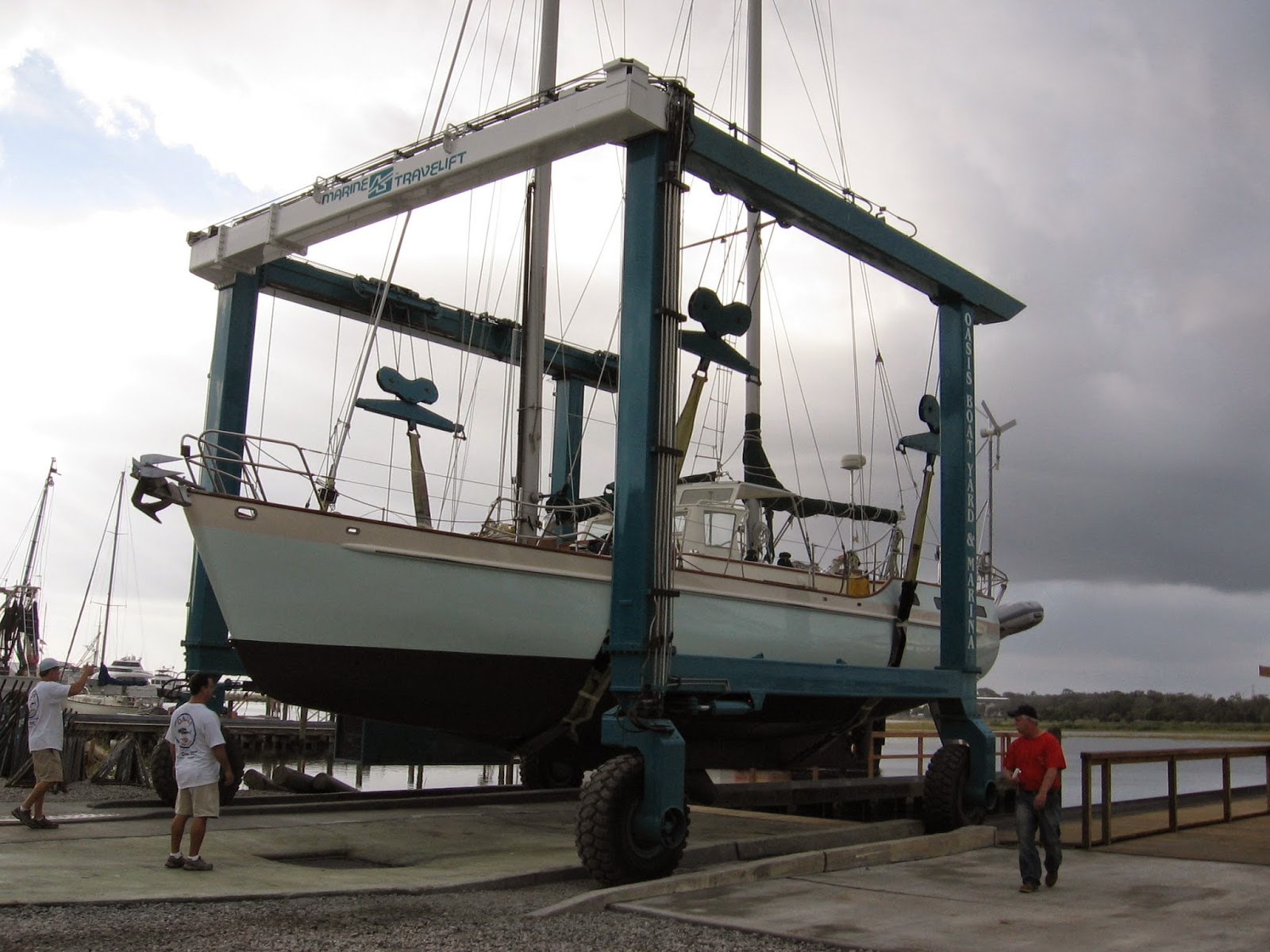 |
| Little Creek 47 "Flutterby". |
 |
| "Flutterby" on Chesapeake Bay. |
Tuesday, February 17, 2015
Wickedly Accurate Didi 29 Retro Project in North Carolina
I designed the Didi 29 Retro for Mike Kopman, a professional charter skipper who lives in my hometown of Hout Bay, South Africa. Mike's concept was to adapt the Didi 26 cruiser/racer design to a more traditional concept, with counter stern, bulwarks, boxy trunk cabin and a big gaff rig, for participation in the Caribbean classic racing circuit. Mike received the first CNC kit to this design, supplied by CKD Boats in South Africa. The second kit went to Bruce Mierke of Murphy, North Carolina, which he ordered from our list of plywood kits.
Mike Kopman has been building his workshop ahead of the boatbuilding project, so that hasn't started yet. Bruce Mierke started his boat a few months ago and is moving along very well. These photos are of Bruce's build. He began with some smaller items ahead of starting the hull, so I am showing those first.
Read More..
Mike Kopman has been building his workshop ahead of the boatbuilding project, so that hasn't started yet. Bruce Mierke started his boat a few months ago and is moving along very well. These photos are of Bruce's build. He began with some smaller items ahead of starting the hull, so I am showing those first.
 |
| Rudder |
 |
| Foil of lifting keel |
 |
| Beaver-tail ballast bulb |
 |
| Carbon spars for gaff rig. |
 |
| Bulkheads and framework set up on building stocks. |
This design has a spade rudder that is installed in a cassette so that it can be lifted out through the cockpit for trailing or shallow moorings. Bruce has added a motor well also, in which he will run a Torqueedo electric outboard. The casings that contain the outboard well and rudder cassette can be seen on the photo above and others in this series.
 |
| Bottom panels installed, rudder cassette and Torqueedo test-fitted |
 |
| Radiused section of skin completed. |
 |
| Aft view, with hardwood-veneered transom |
 |
| Plug of engine well and rudder cassette in place. |
Bruce has modified my rudder cassette design to allow some steerage with the rudder partially raised to assist when approaching shallow moorings with the keel raised.
He is very happy with the quality and accuracy of the kit that we supplied, describing it as "wicked accurate".
For info on our full range of designs, please visit http://dixdesign.com/
Subscribe to:
Posts (Atom)
